
You can lose an entire weekend chasing a buffer setting, a routing problem, or a plugin conflict that should have taken ten minutes to solve. That is exactly why a music production mentor online can be more valuable than another course, another forum thread, or another playlist of tutorials. When your setup, your DAW, your interface, and your goals are all specific to you, generic advice usually creates more delay than progress.
For most producers, the real problem is not a lack of information. It is too much information, most of it disconnected from the actual session in front of them. You search for help with latency in Ableton Live, but the video assumes different hardware. You look up vocal mixing in Pro Tools, but the trainer skips over gain staging because they think it is obvious. You try to follow a Studio One tutorial, but your template, routing, and plugin chain do not match. Now you are stuck, frustrated, and no closer to finishing the track.
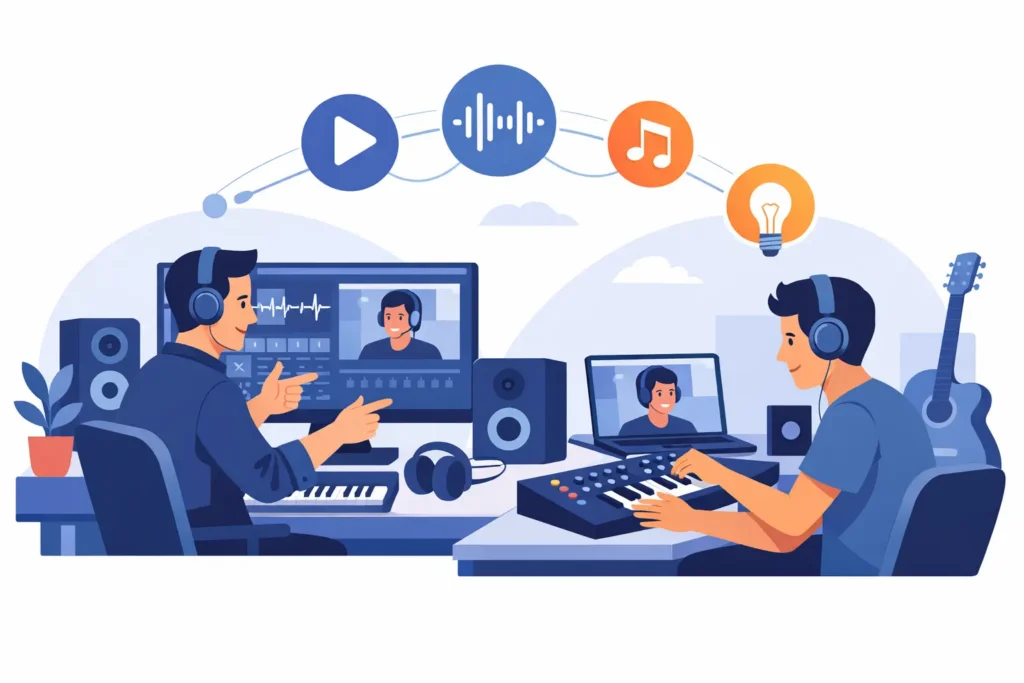
That is where direct mentorship changes the equation. A real mentor does not teach in the abstract. They look at your screen, your workflow, and your choices, then show you what to fix and why it matters.
What a music production mentor online actually does
A good music production mentor online is not just there to answer random questions. The best mentorship combines technical support, skill development, workflow coaching, and accountability. That matters because music production problems rarely happen in isolation. A muddy mix might really be an arrangement issue. MIDI timing problems might come from interface configuration. Slow sessions might be caused by poor file management, bad template design, or a computer that is optimized badly for audio.
In practical terms, mentorship often starts with the immediate issue. Maybe Logic Pro is not recognizing your audio device. Maybe Cubase is dropping out during playback. Maybe your vocal chain sounds harsh, your drums feel weak, or your mastering chain is over-compressing the life out of the song. An experienced mentor helps you solve the problem in real time, but they also help you understand the decision behind the fix so you do not keep repeating the same mistake.
That is a major difference from pre-recorded education. Courses are designed for the average student. Mentorship is designed for the person sitting in the chair right now, with this project, this room, this budget, and this deadline.
Why generic tutorials stop working
Free content has its place. If you need a quick overview of sidechain compression or want to compare DAWs, there is no shortage of material. The problem starts when your issue gets specific. And in music production, specific is where the real work happens.
A video cannot tell whether your MIDI controller is misconfigured or simply mapped incorrectly. A blog post cannot hear that your low end is collapsing because your kick and bass are fighting in the same range. A forum cannot watch you build a vocal bus and correct three inefficient steps that are slowing every mix you do.
Even strong educational content has limits. It cannot ask follow-up questions. It cannot react when your plugin menu looks different because your software version changed. It cannot tell when your arrangement problem is really a monitoring problem. That is why so many producers spend months learning and still feel stuck.
A mentor shortens that cycle. Instead of consuming five hours of content to maybe find a relevant answer, you can get one clear answer based on your exact setup.
The fastest gains usually come from workflow, not gear
A lot of musicians assume they need better equipment when what they really need is a better process. This is one of the biggest blind spots in home studios. People buy another microphone, another plugin bundle, another controller, hoping the next purchase will make sessions easier. Usually it does not.
The producers who move forward fastest tend to have repeatable systems. Their sessions are organized. Their templates make sense. Their routing is clean. They know how to track without technical interruptions. They know how to move from writing to editing to mixing without destroying momentum.
This is where online mentorship pays off quickly. A mentor can help you build a workflow that fits how you actually work. If you are a singer-songwriter recording at home, you need something different from a beatmaker sending stems to clients. If you are mixing podcasts and records in the same room, your template and monitoring decisions will be different from someone producing EDM entirely in the box.
The right advice depends on context. That is why one-on-one guidance often produces faster results than broad education.
A mentor should adapt to your DAW and your goals
Not every producer needs the same kind of help. A beginner using Studio One may need help with recording basics, gain staging, and template creation. An intermediate Pro Tools user may need to tighten editing speed, improve routing, and get serious about mix translation. An advanced Ableton Live producer might want better sound design decisions, cleaner session management, or help integrating external synths and hardware.
The point is not just learning software features. It is learning how to use those features to finish better work.
That is also why live support matters. If your DAW freezes during setup, if your interface is not clocking properly, or if your MIDI routing is creating duplicate notes, waiting for an email response is not much help. Real-time instruction gets you back to making music.
When online mentorship is the right move
There is no single perfect learning model for everyone. Some people do well with self-study, especially if they are disciplined, technically confident, and not under pressure. But if you are losing time, losing momentum, or second-guessing every move, mentorship becomes less of a luxury and more of a practical decision.
It usually makes sense when you keep hitting the same technical issue, when you have songs started but not finished, when your mixes never sound the way they do in your head, or when your setup has become complicated enough that trial and error is wasting too much time.
It also makes sense when you are trying to grow professionally. If you are producing for clients, releasing your own music consistently, or building a studio business, slow learning is expensive. Every hour spent troubleshooting alone is an hour not spent creating, delivering, or improving your catalog.
What to look for in a music production mentor online
Experience matters, but relevance matters just as much. A great engineer is not automatically a great teacher. You want someone who can explain clearly, diagnose problems quickly, and work inside the tools you use every day.
Look for a mentor who can handle both the musical side and the technical side. That means not just mix notes and production theory, but hardware setup, DAW configuration, latency, routing, session organization, and troubleshooting. In the real world, these things overlap constantly.
You should also look for flexibility. Some users need long-term coaching. Others need targeted help for one project or one technical mess. A solid service should support both. That is one reason platforms like OBEDIA have remained useful to home studio users for years – they address the actual bottleneck in front of the customer instead of forcing everyone into the same training path.
Real progress comes from getting unstuck fast
There is a point where more content becomes a form of procrastination. You are not learning because you are moving forward. You are learning because you do not want to risk making the wrong decision. That is common in production, especially when every step feels technical and permanent.
A mentor helps break that pattern. They can tell you when your mix is actually close. They can show you why your vocal is sitting wrong. They can clean up your routing, fix your monitoring path, and help you stop overprocessing. Just as important, they can help you make decisions faster.
That speed matters. Finished music teaches more than endless preparation ever will.
The best online mentorship is not about dependence. It is about building confidence through direct experience. Over time, you stop guessing. You start hearing problems earlier, solving them faster, and working with more intention.
If your studio setup keeps slowing you down, if your tracks keep stalling out, or if your learning has turned into a loop of scattered advice, a real mentor can change that quickly. Not by giving you more theory, but by helping you make better records with the tools you already have. That is usually the moment things start to click.