
A session can stop cold over something that should take two minutes: a MIDI controller that will not map correctly, a vocal chain that suddenly adds latency, or a mix that sounds fine in the studio but falls apart in the car. Producer coaching outcomes matter because they turn those stalled hours into clear decisions, working systems, and finished music. The right coaching does not just answer a question. It changes what you can do on your own in the next session.
For home studio producers, the value is rarely abstract. You want to record a better vocal tonight, build drums without fighting your DAW, finish a mix with confidence, or connect the hardware you already bought. Good one-on-one coaching is built around that real-world goal, not a generic lesson plan designed for someone else’s setup.
What Strong Producer Coaching Outcomes Look Like
The most immediate result is clarity. Instead of searching through five videos that each solve part of the problem, you work with an engineer who can see your screen, hear what is happening, and identify the actual issue. Maybe the problem is a routing setting in Pro Tools. Maybe it is a sample-rate mismatch between your interface and your session. Maybe the mix problem is not the limiter at all, but an arrangement with too much competing low-midrange information.
That distinction saves time. It also prevents the common habit of changing ten settings at once, then having no idea what fixed the problem or made it worse.
A productive coaching session should leave you with a result you can hear or verify. Your audio interface is recording on the correct inputs. Your Ableton Live template opens with routing ready to go. Your Logic Pro vocal chain is gain-staged and organized. Your Studio One mix has a clear bus structure. These are not glamorous wins, but they are the foundation of reliable work.
The next outcome is better decision-making. Producers often assume they need more plugins, better monitors, or another course. Sometimes they do need an equipment upgrade or deeper training. More often, they need to understand the tools already in front of them and make decisions in the right order. Coaching can show you when to fix the source, when to edit, when to use EQ, and when to stop processing a sound that is already working.
Faster Workflow Without Cutting Creative Corners
Speed is a major benefit of coaching, but fast does not mean rushed. A faster workflow means less friction between the idea in your head and the audio coming out of your speakers.
That might start with session organization. If every new project opens with random tracks, inconsistent routing, and no labeling, you spend creative energy managing clutter. A coach can help you build a template that matches how you actually work: your preferred drum instruments, vocal inputs, cue mixes, effects returns, mix buses, and reference-track routing. Once it is built correctly, that template becomes useful every time you create.
Workflow coaching also exposes the habits that quietly waste time. Maybe you are manually consolidating audio because you do not know the right editing commands. Maybe you are freezing tracks too early and making revisions difficult. Maybe you are printing effects unnecessarily because you are unsure how to manage CPU load. These are fixable problems, and the answer depends on your DAW, computer, plugins, and production style.
There is a trade-off here. Templates and shortcuts help, but they should not turn every song into the same production. A useful workflow gives you a reliable starting point while leaving room to follow the record. The goal is not to make your process rigid. It is to remove the technical distractions that interrupt good instincts.
Better Mixes Start Before the Mix Bus
One of the most valuable producer coaching outcomes is learning to diagnose a mix instead of reacting to it with random processing. When a chorus does not lift, the answer may be arrangement, automation, frequency balance, dynamics, or all four. Adding another mastering plugin will not solve a chorus that lacks contrast.
A coach can listen to your actual session and help separate symptoms from causes. If the vocal feels buried, you may need level automation and arrangement space before compression. If the kick disappears on smaller speakers, the issue may be its relationship with the bass rather than a lack of subwoofer output. If your master clips, the best move may be lowering individual tracks and rebuilding headroom, not simply putting a limiter on the problem.
This is where personalized instruction beats passive content. A tutorial can explain parallel compression. It cannot tell you whether parallel compression is the move your current song needs. It also cannot hear your vocal recording, your room, your monitoring level, or the choices that got the session to its present state.
Over time, this kind of feedback strengthens your ears. You begin to recognize when a sound is too bright versus too aggressive, when a reverb is pushing a vocal back, and when low end is powerful versus merely loud. That is a better long-term outcome than collecting a long list of mixing tricks.
Confidence With Your DAW and Hardware
Technical problems are especially frustrating because they can make capable producers feel stuck before the creative work even begins. A new interface will not show up in Cubase. Your MIDI keyboard triggers notes but not transport controls. Your microphone is recording at a level that is either too low or constantly clipping. You can lose an entire evening to a configuration issue that an experienced engineer recognizes quickly.
Coaching should address the immediate problem and explain the chain behind it: computer settings, driver selection, interface configuration, DAW audio device settings, track routing, and monitoring. Once you understand where those pieces connect, future troubleshooting gets much easier.
Not every hardware issue can be solved remotely. A failing cable, damaged port, or incompatible device may require replacement or hands-on repair. Good coaching does not pretend otherwise. It helps you narrow the issue down before you spend money, return working gear, or replace equipment that was never the problem.
How to Measure Coaching Results
Do not judge coaching by whether the session felt productive alone. Judge it by what changes in your work afterward. You should be able to point to a few practical improvements: sessions start faster, you complete more drafts, recording takes are cleaner, mix revisions are more focused, or you can solve common technical issues without starting from zero.
For a beginner, a strong result may be recording a song from start to finish without confusion about inputs, monitoring, and export settings. For an intermediate producer, it may be building a repeatable vocal-production workflow or finishing mixes that translate beyond the studio. For an advanced user, it could be refining mix decisions, integrating complex hardware, preparing stems for collaboration, or getting objective feedback before release.
Progress is not always a finished song after one call. A complicated problem may need several sessions, especially when you are rebuilding a template, learning a new DAW, or correcting years of inefficient habits. But each session should create forward movement. You should know what changed, why it changed, and what to practice next.
The Difference Between Answers and Coaching
A quick answer can fix a setting. Coaching builds capability. Both have value, and sometimes you truly just need someone to tell you why there is no sound coming from output three and four. But if the same categories of problems keep returning, the larger opportunity is to build a workflow you understand.
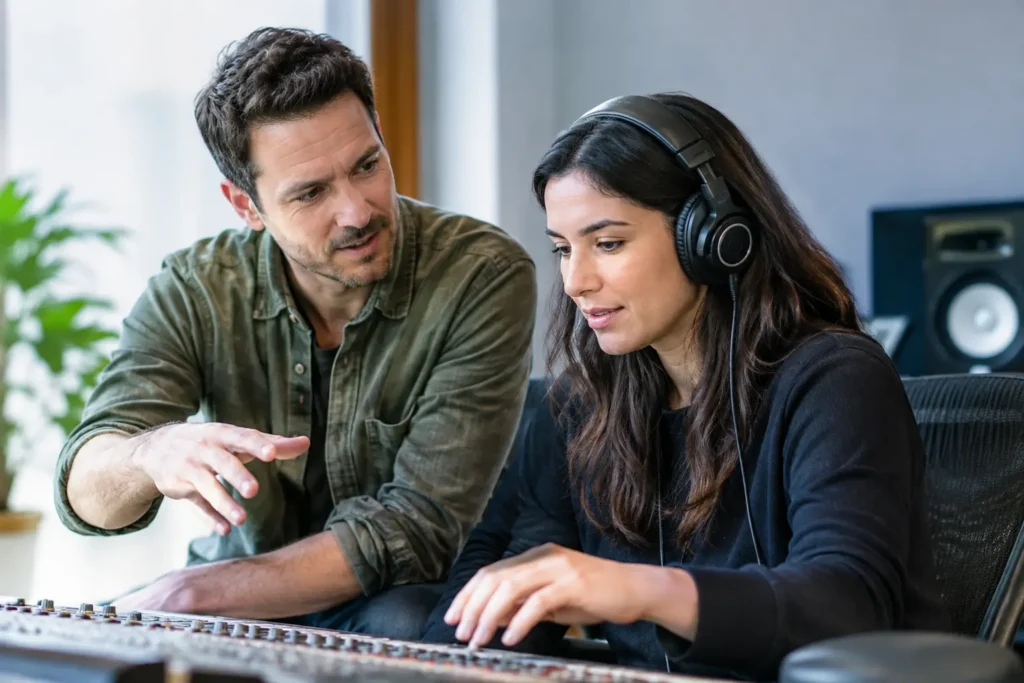
That is why live, one-on-one instruction is so effective for producers working from home. Your music, your software version, your interface, and your goals are all part of the session. OBEDIA’s approach puts an experienced audio professional in the room with you remotely, so the instruction applies to the project on your screen instead of a hypothetical session.
The best outcome is not dependence on help. It is creative independence backed by knowing where to get expert support when a real technical or production challenge appears. Bring the session that is giving you trouble, identify the next result you need, and work from the audio in front of you. That is how unfinished ideas start becoming records.